I thought I understood what a destination management company did. I had worked with enough of them. They book the cars and the tables, confirm the guides, hold the contingencies you never see. Useful, invisible, logistical. I arrived in Seoul expecting the same.
I left with a different word for it. The best of them do not organise a destination. They edit it.
That distinction sounds small. It is not. An itinerary is a list. An edit is a point of view, what to include, what to leave out, what to place beside what, and in which order. Seoul, handled by someone with judgement, became an argument rather than a schedule. By the end I could no longer separate the city from the sequence in which I had been given it.
Before the trip I held the city the way most visitors do: as a collection. A handful of hotels. A Michelin list. Neighbourhoods with reputations. Attractions ranked by their queues. It is how a destination is sold, and it is how I expected to receive it.
The programme took that collection apart, quietly, over several days. Much of that was the work of Blair Hong. I want to be careful here, because the better she did her job, the less of it I noticed. Nothing announced itself. A morning in the mountains gave way to an afternoon in the city without friction. A maker we met on Tuesday explained something a chef would return to on Thursday. Only afterwards, assembling the week in my head, did I see how much had been decided for me, and how little of it had felt like a decision.
That is the difficulty of the craft. Curation, done well, disappears. It leaves no seam. You are simply somewhere, and it feels inevitable, and the inevitability is the achievement. Hong was not a guide in the usual sense, and certainly not an organiser. She was closer to an editor: choosing the order of ideas, trusting that meaning would accumulate if the sequence was right.
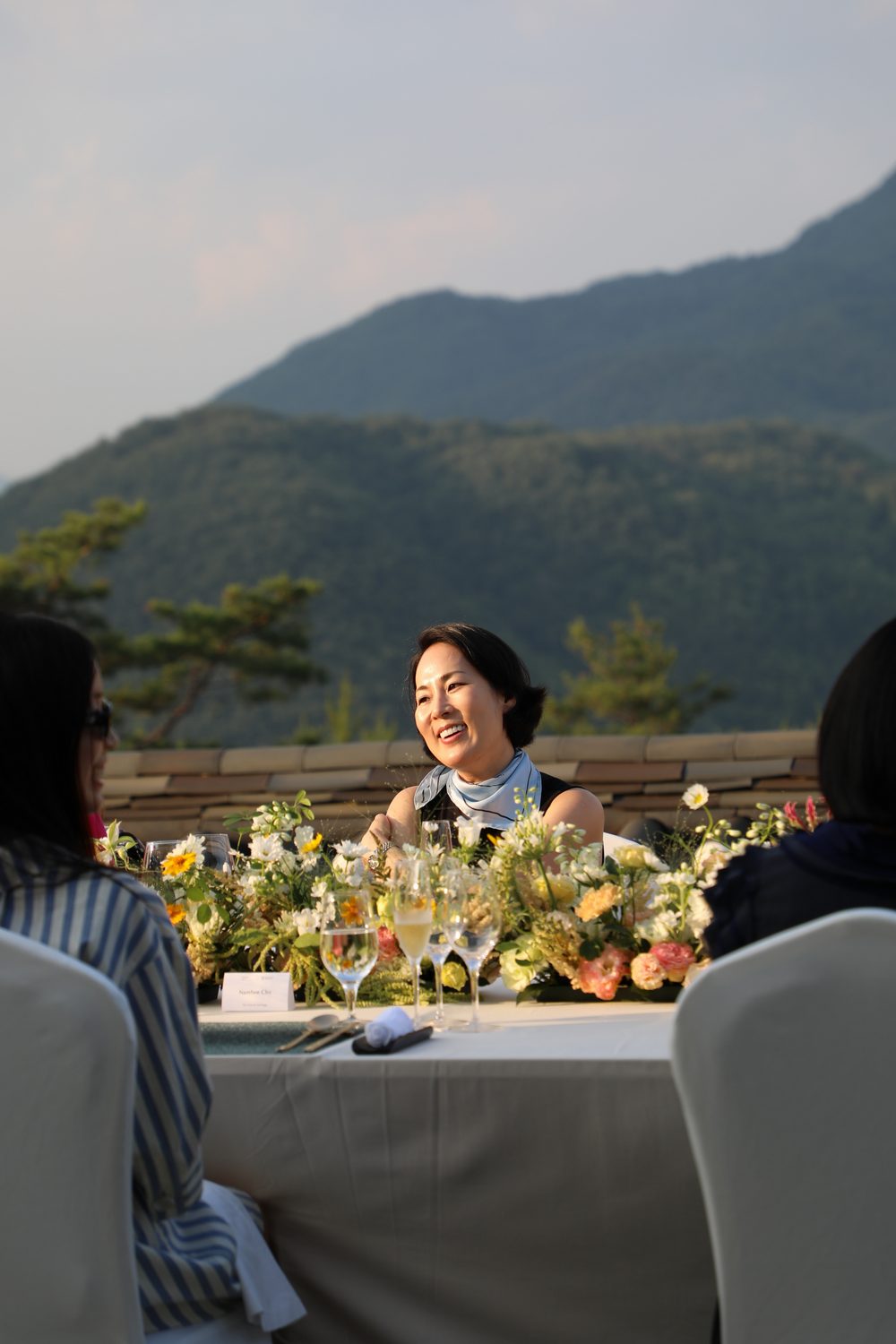
"Curation, done well, disappears. It leaves no seam."
You climb toward the light. The approach to the museum's Turrell wing is a flight of dark stone rising into a bright doorway, and the building withholds the view until you have earned it. I have seen the photographs everyone has seen. None of them prepared me for how the architecture choreographs the body, slows it, quiets it, makes a room out of patience.
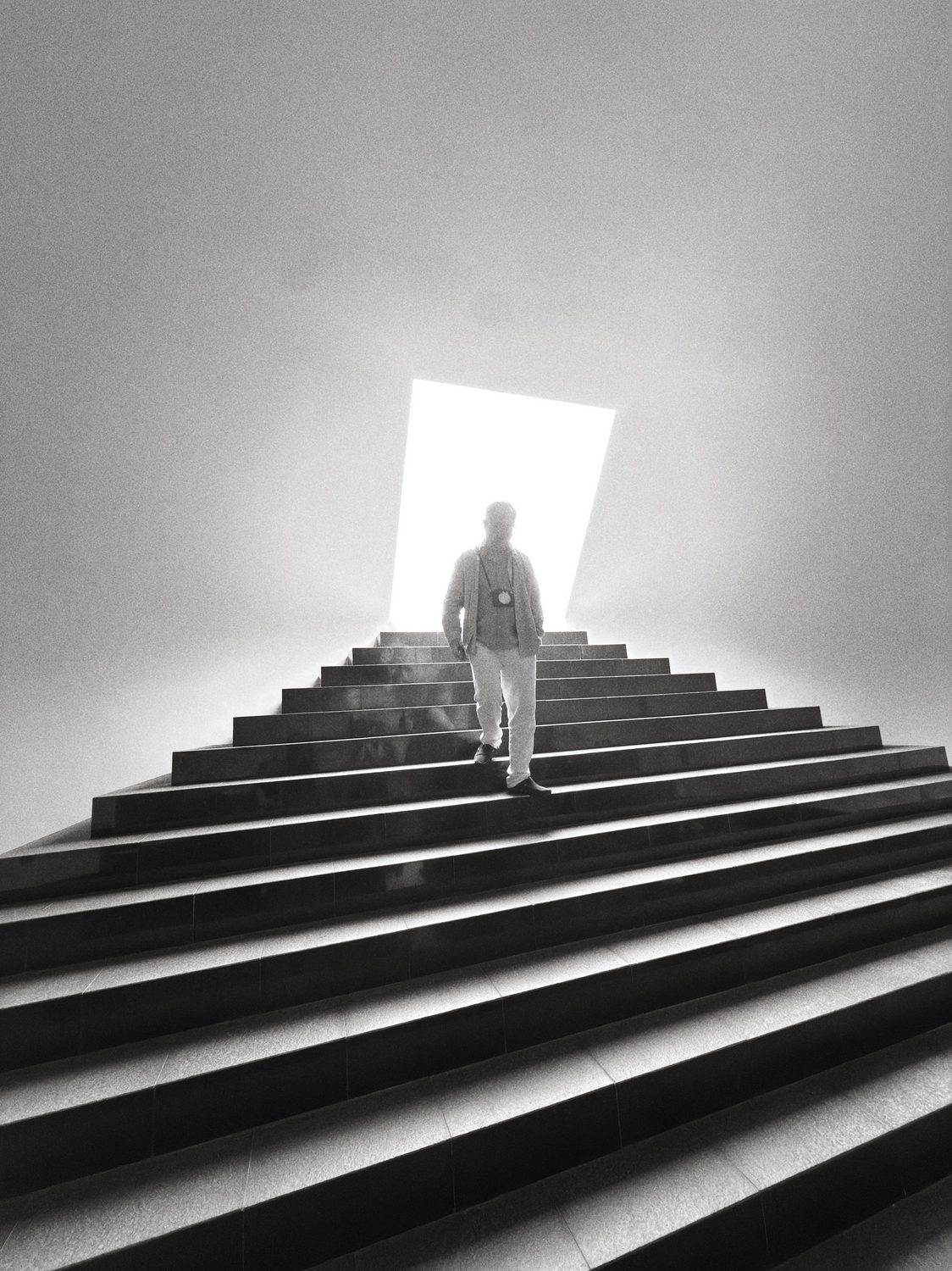
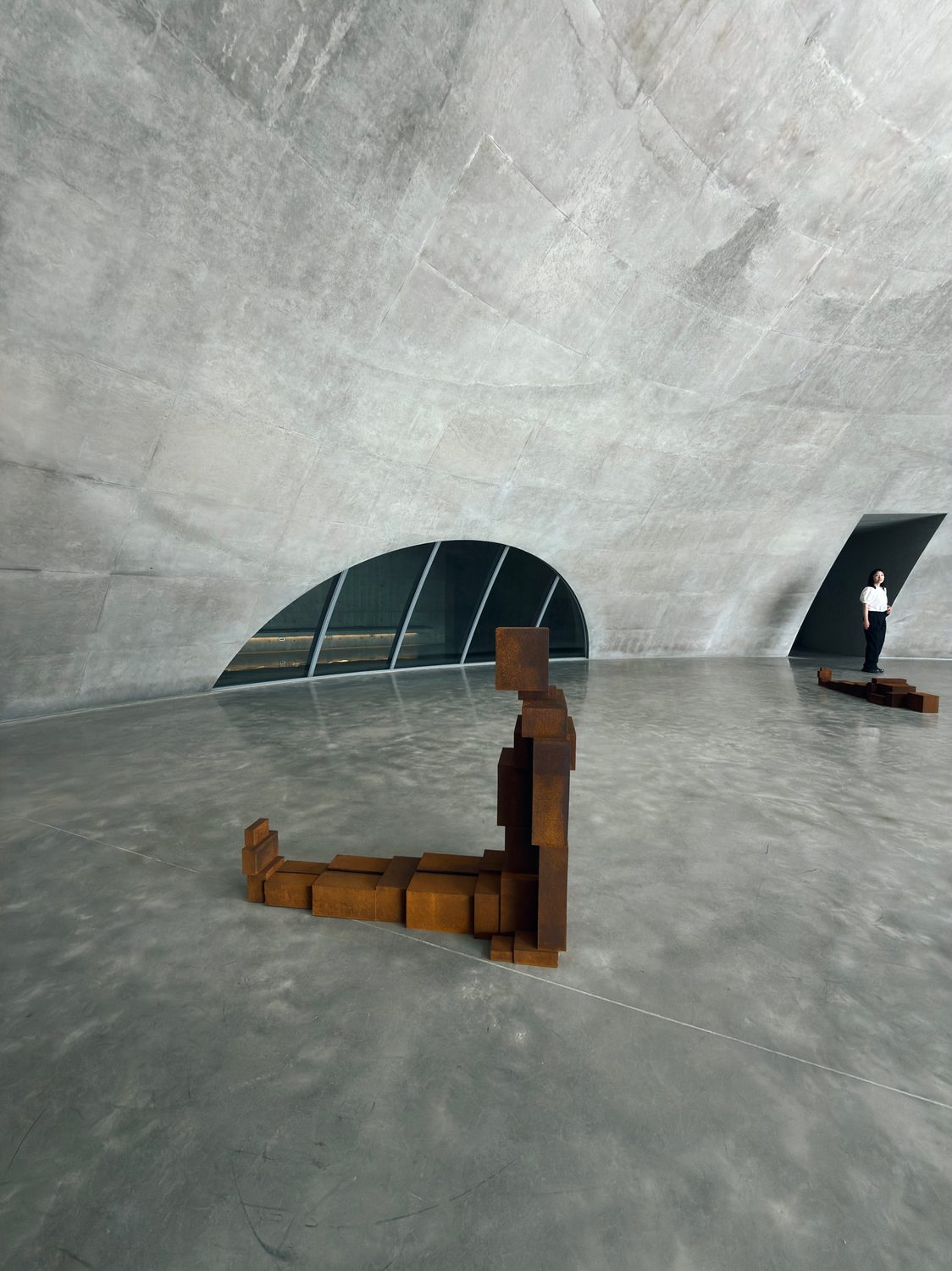
I could write about the concrete, the way it is poured like fabric, the oculus left open to the weather. But the building was not what stayed with me. What stayed with me was the guiding.
Without interpretation, Museum SAN is beautiful architecture. With it, it becomes a proposition about how we look. Our guide did not narrate. She adjusted attention, pointed out where to stand, when to wait, what the light would do if we gave it a minute. The figure on the floor stopped being an object and started being a question. The same room, the same hour, the same group: only the noticing had changed, and the noticing changed everything.
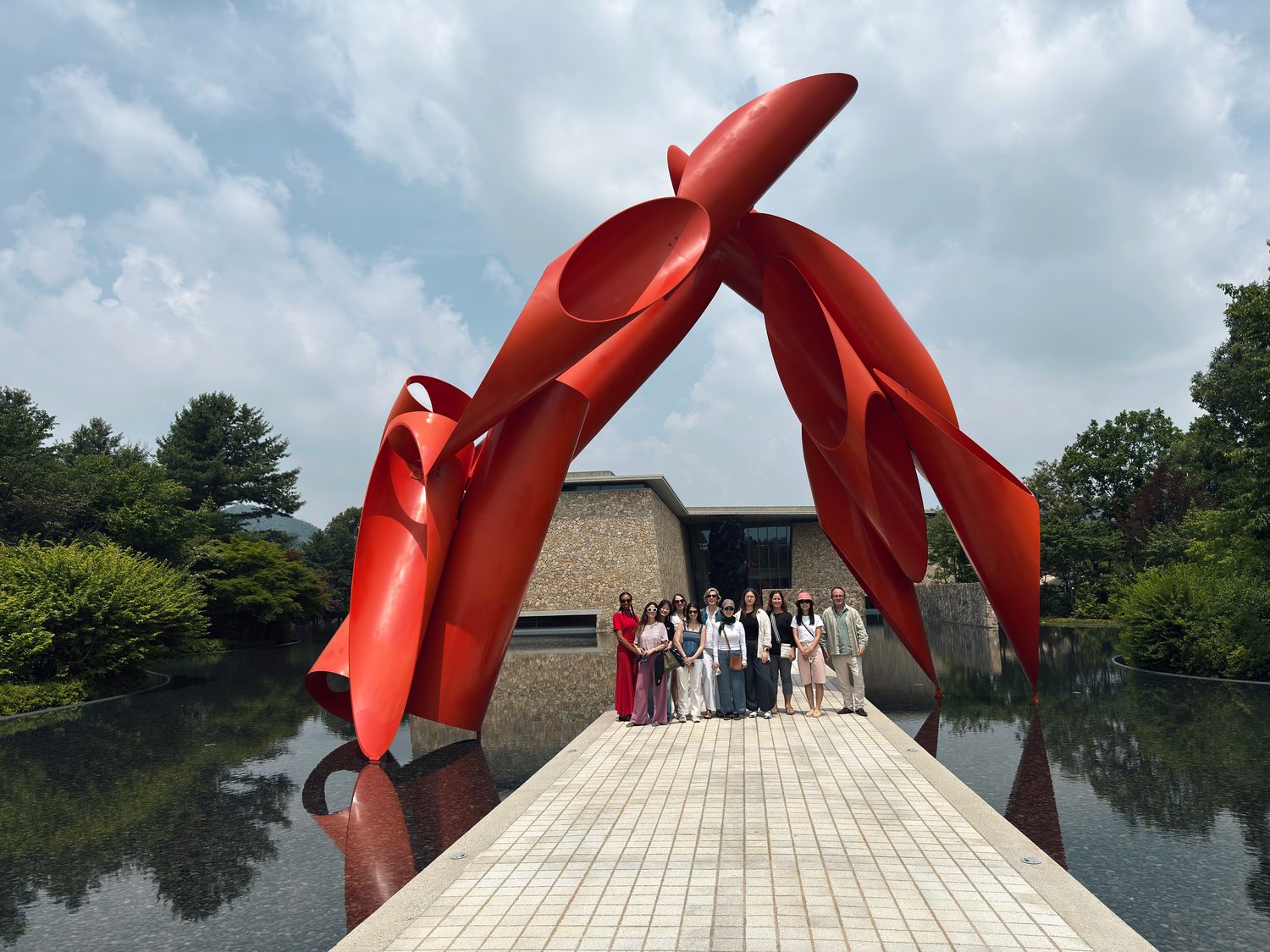
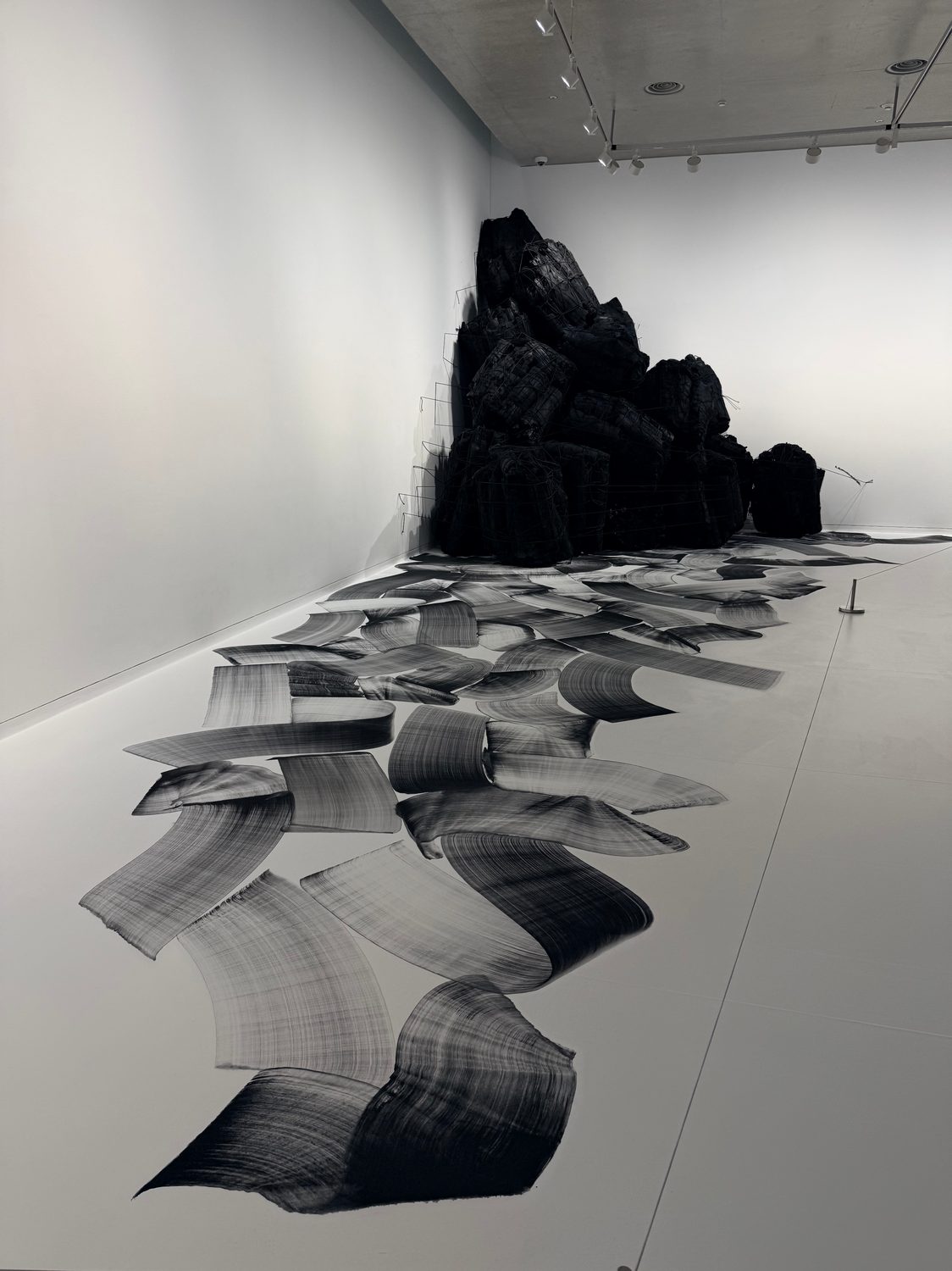
Good guiding is not the transfer of facts. It is the redistribution of attention. I left thinking about how much of what we call taste is simply having once been shown where to look.
"Good guiding is not the transfer of facts. It is the redistribution of attention."
Some places are accommodation. The Hanok Heritage is an argument.
It was built by Cho Chung-il, the founder of the fintech company KONA I, and it was not built to recreate the past. It was built to test a proposition: that traditional Korean architecture can carry contemporary engineering without losing what makes it Korean. The result refuses the usual compromise.
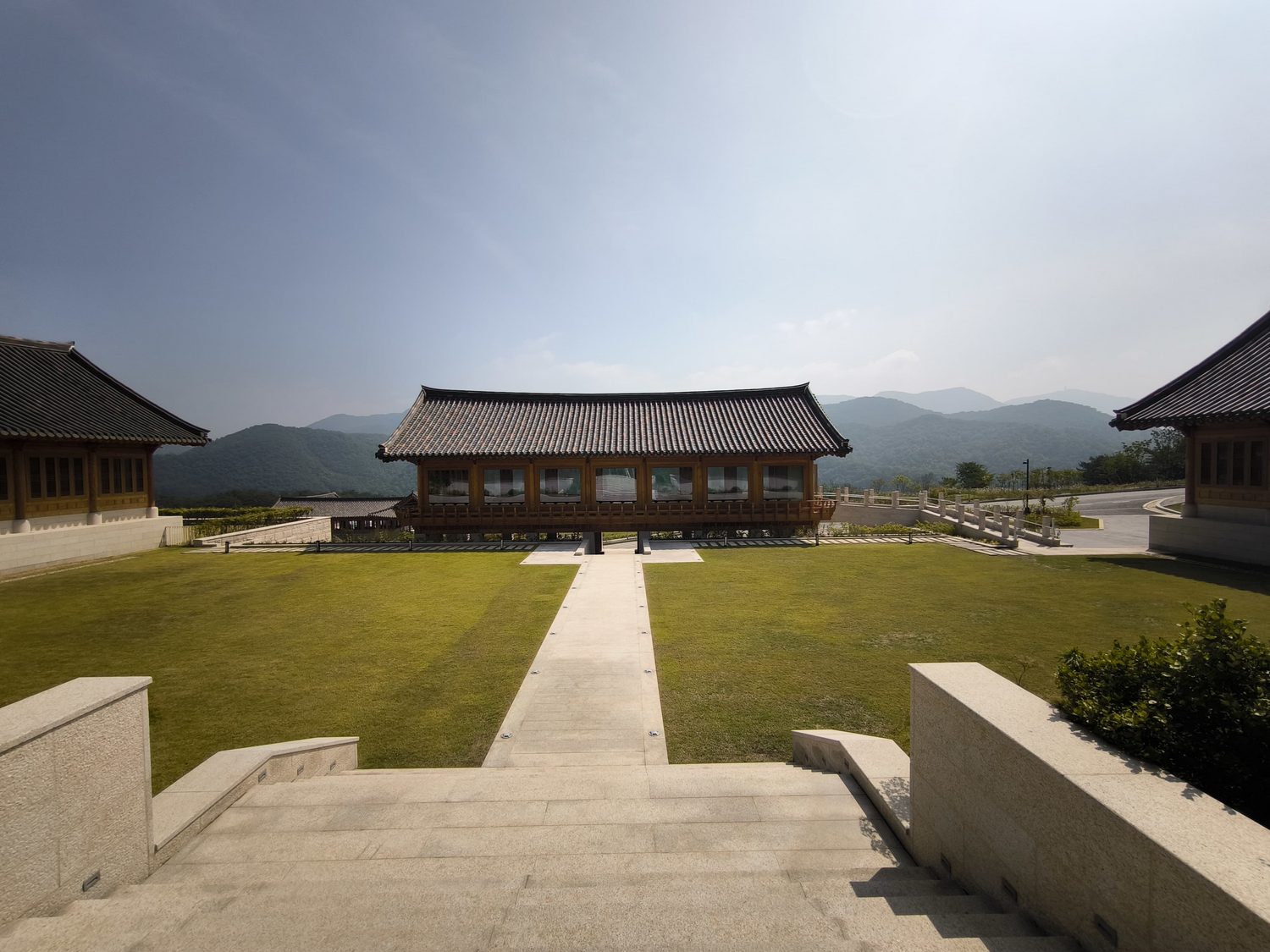
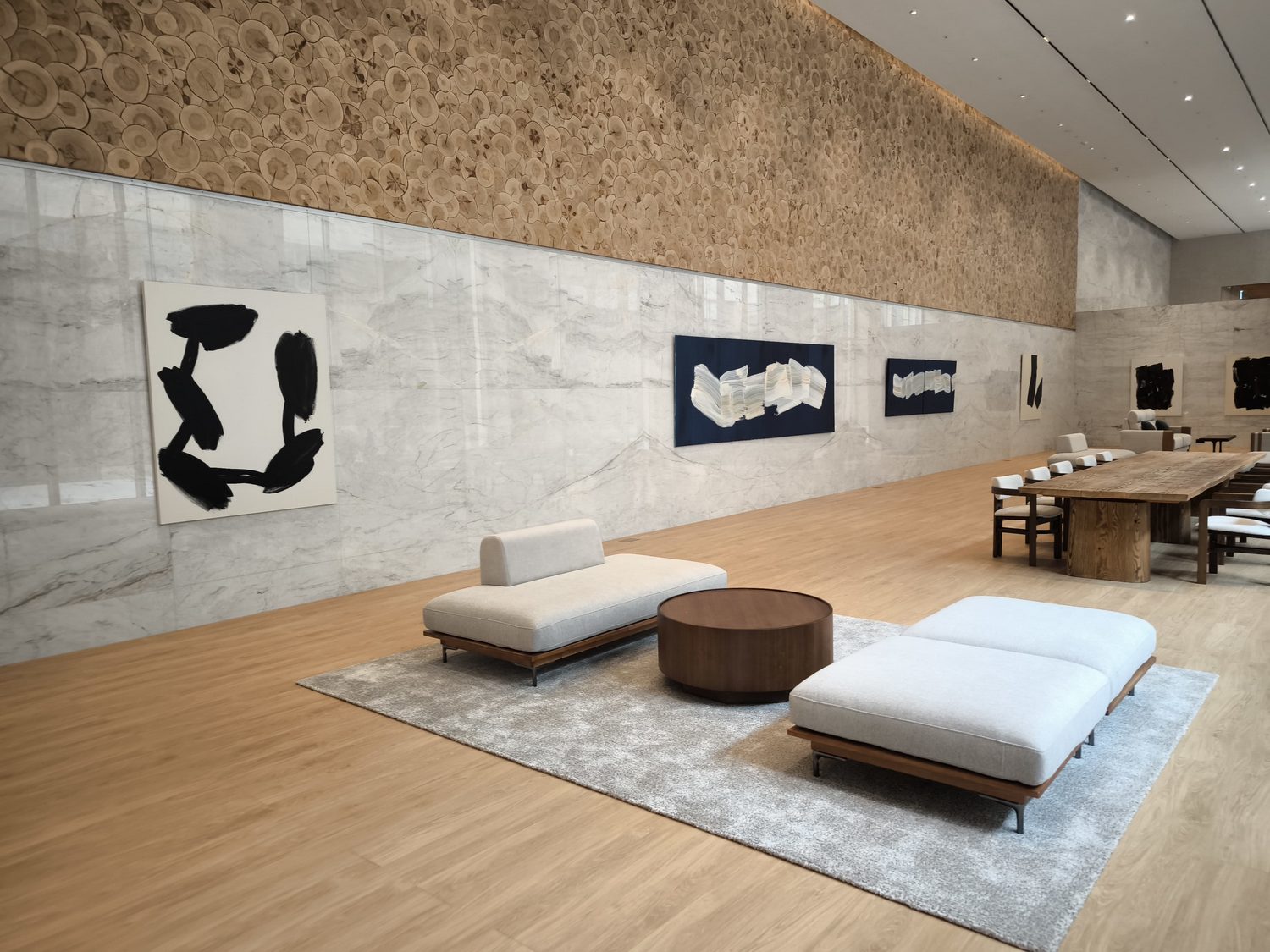
The exterior is unmistakably hanok, the tiled eaves, the timber frame, the curve of the roofline against the hills. Step inside and the century changes. Luxury is not subtracted from tradition here. It is reinterpreted through it.
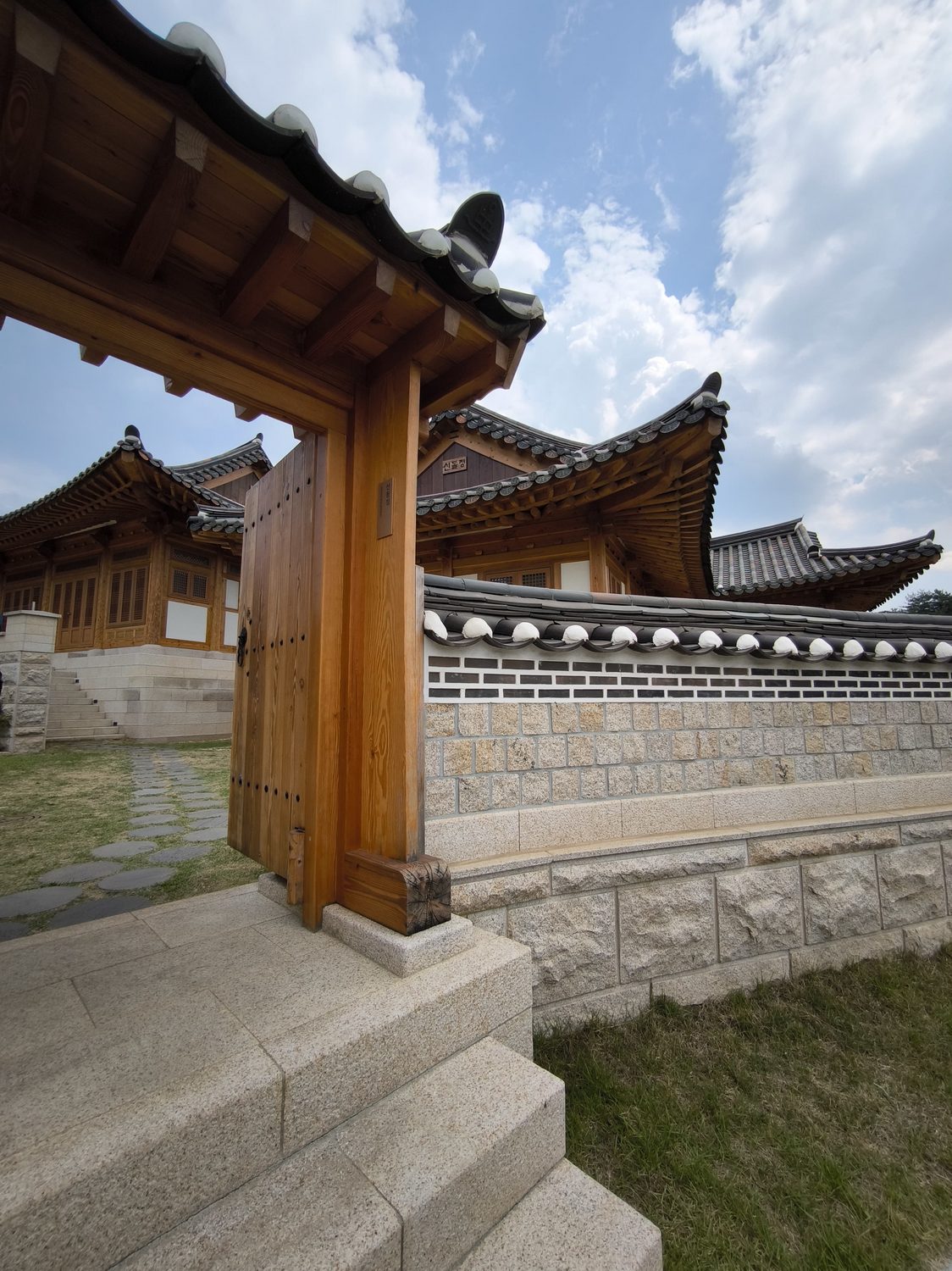
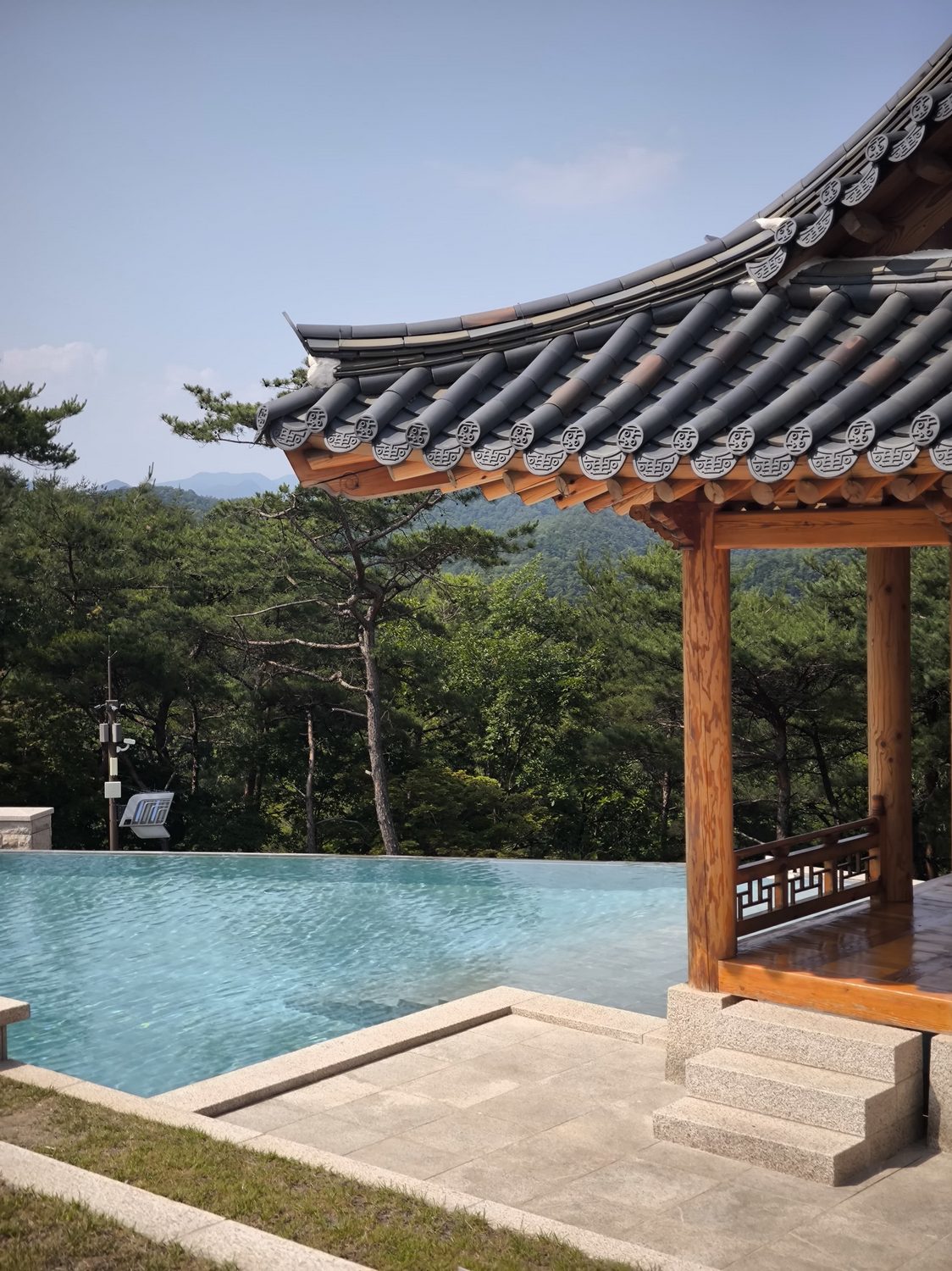
I spent several days with Namhee Cho, who introduced her father's vision patiently, without pitch. We talked more than we toured. And it was the conversations, not the rooms, that did the work. A building can show you what someone made. Only a person can tell you why. Each exchange added a layer the architecture alone could not, the reasoning behind a joint, the argument for a material, the decision to let a forest sit in a window for two storeys and call that enough.
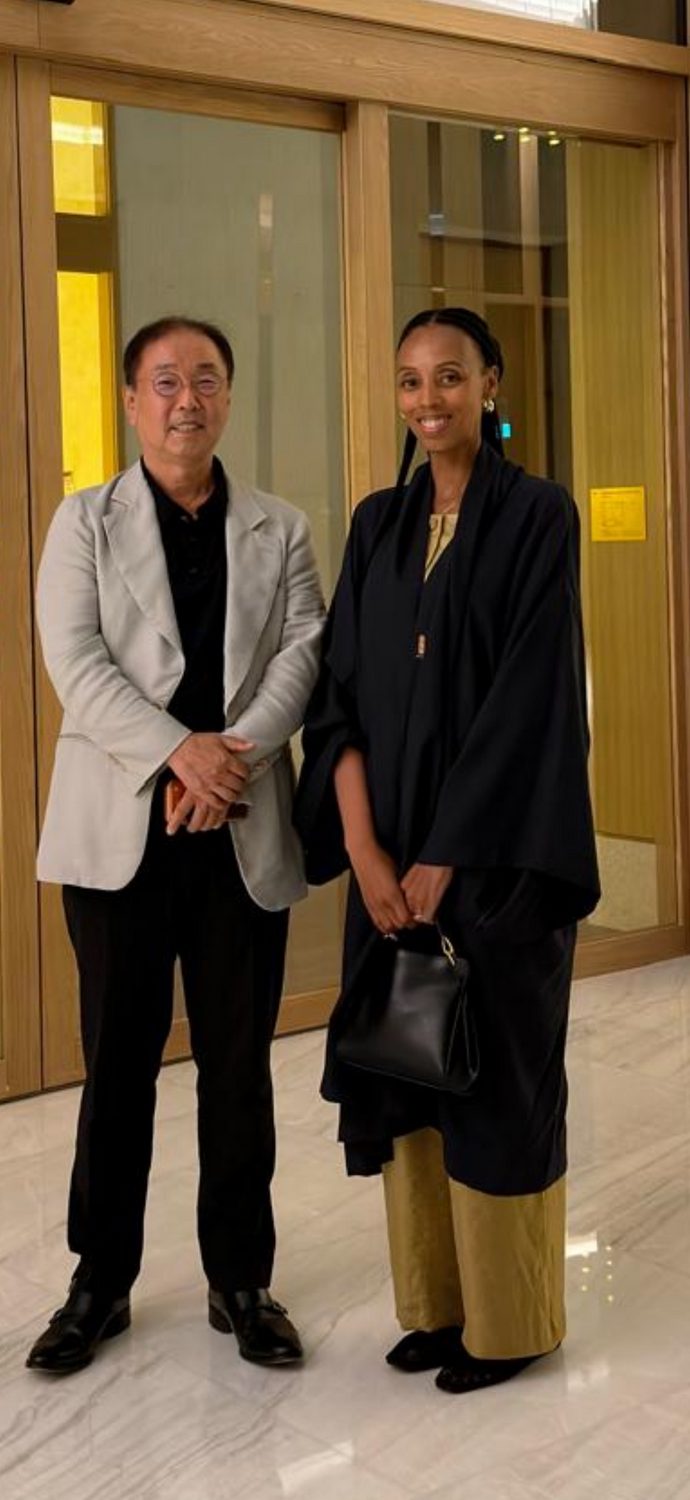
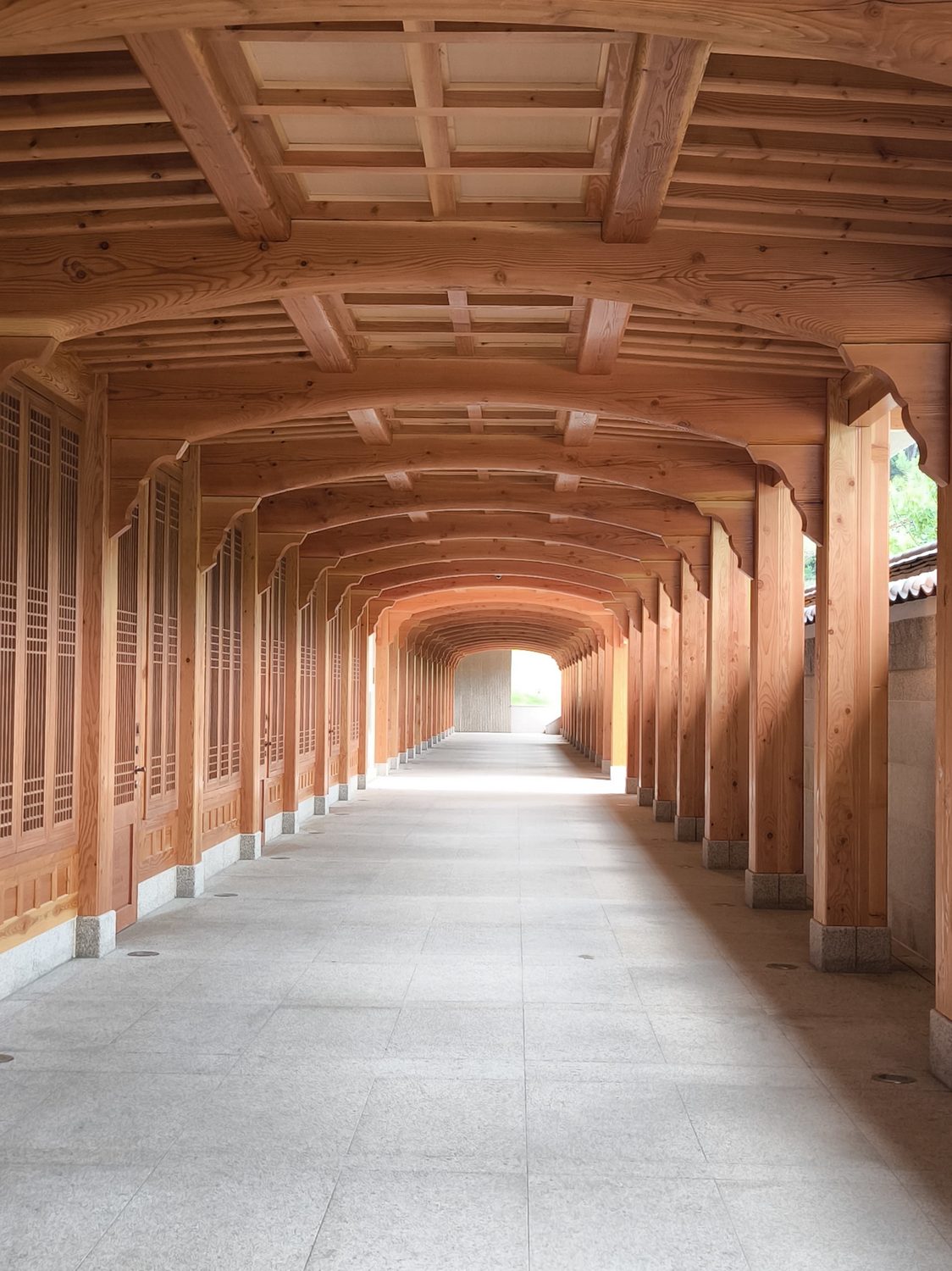
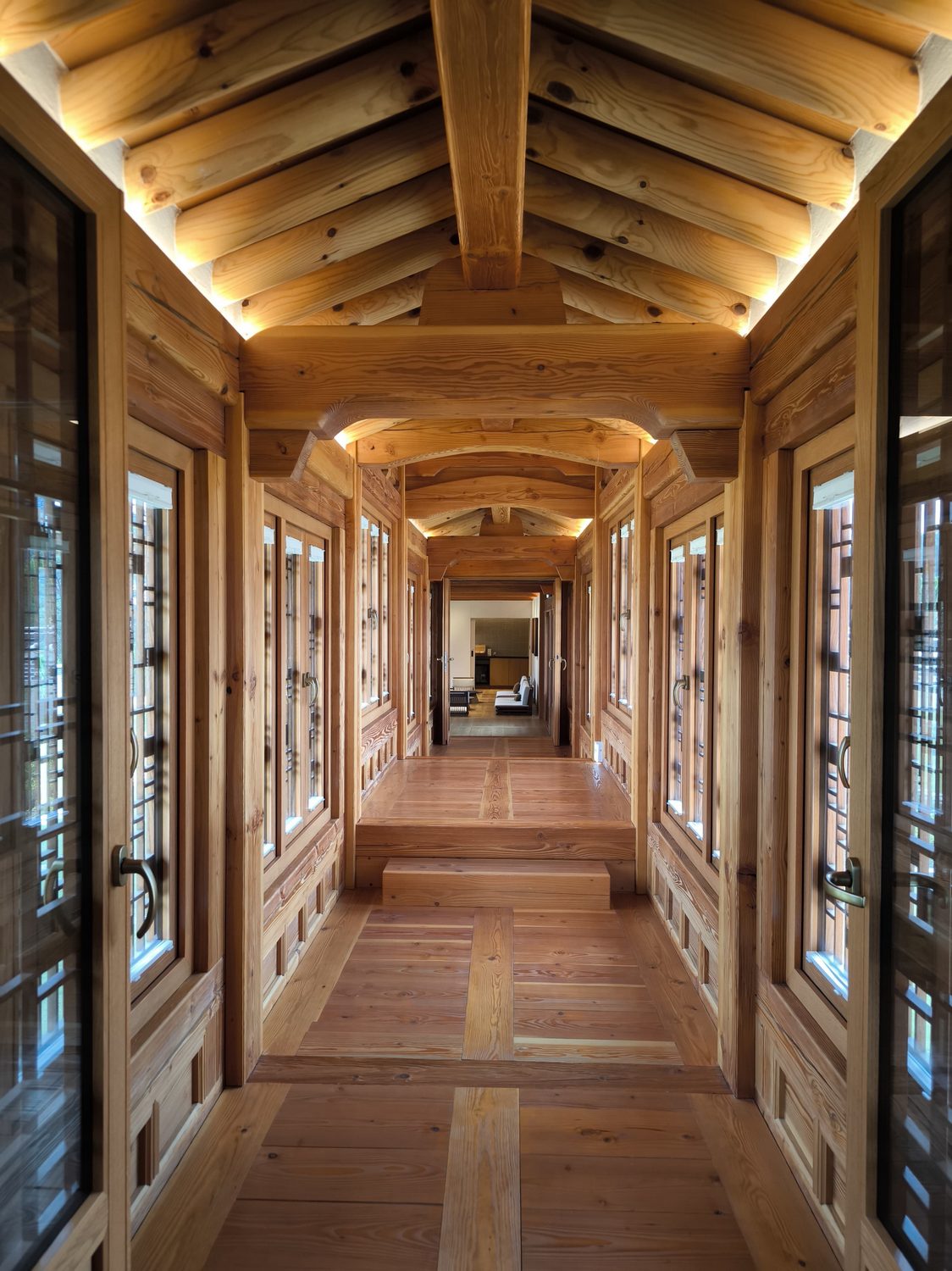
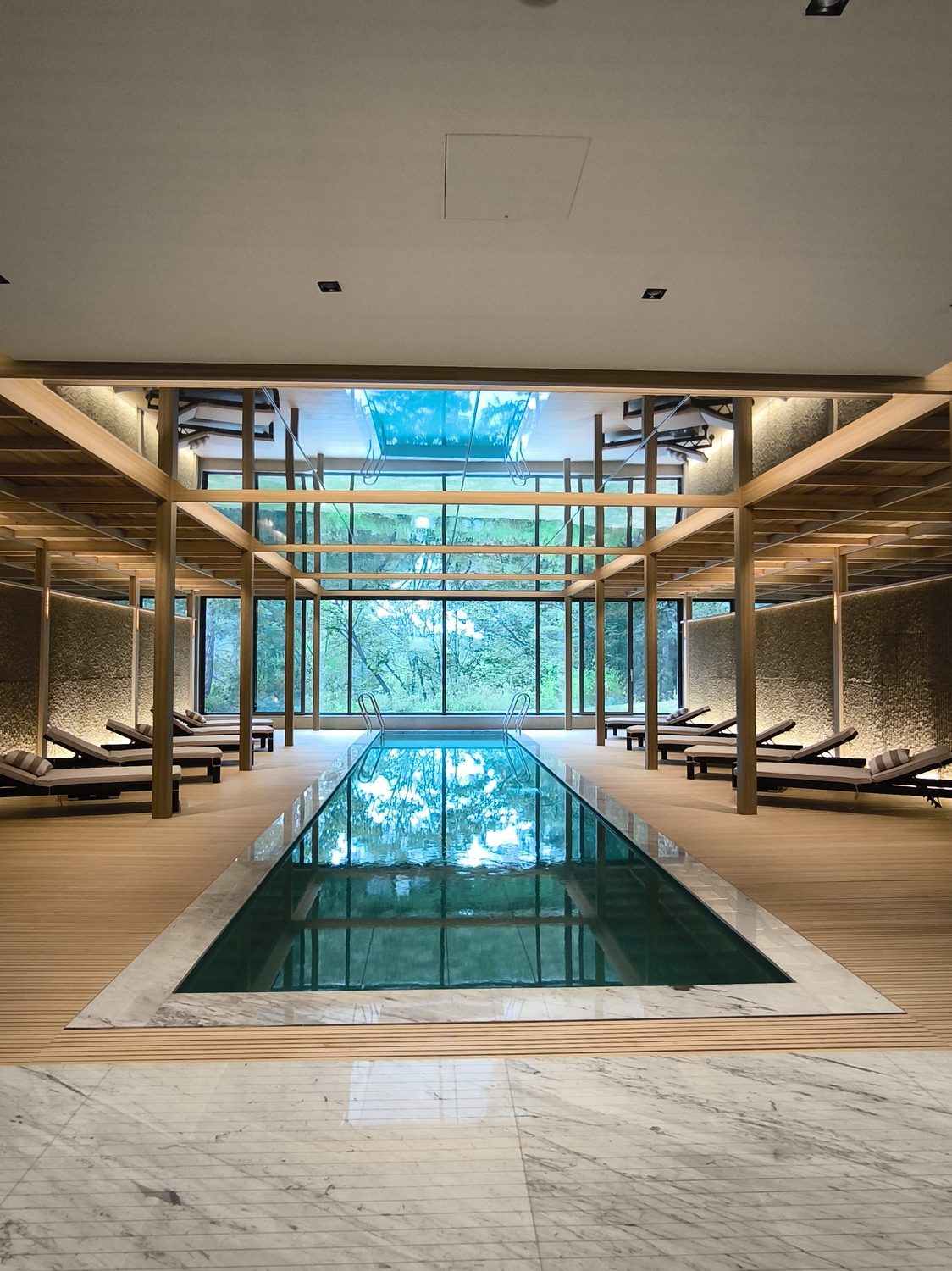
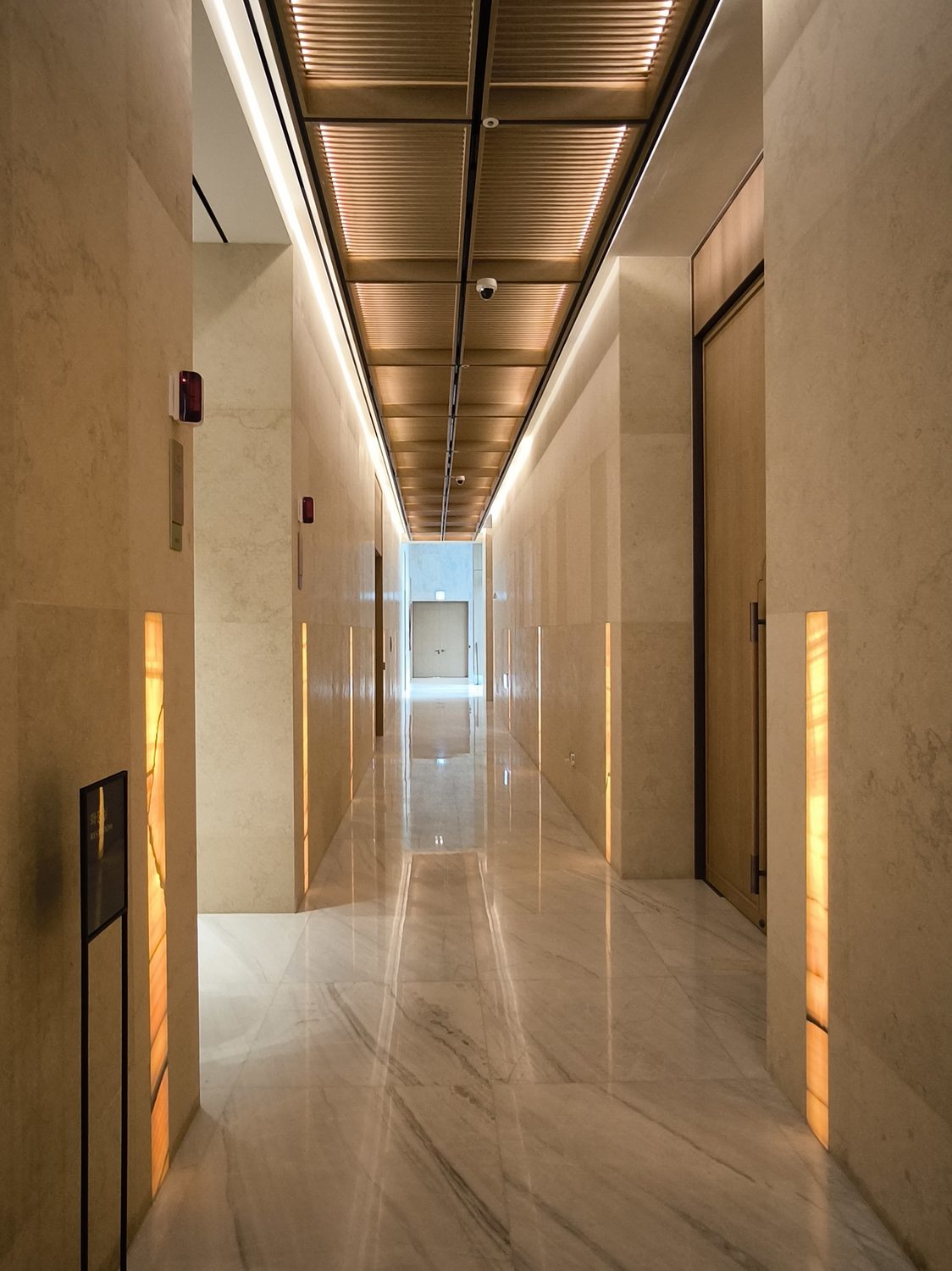
You can walk a property in an hour. You cannot understand it in one. The difference is conversation, and conversation cannot be scheduled into a site inspection. It has to be allowed.
"A building can show you what someone made. Only a person can tell you why."
Being Dressed, and Making
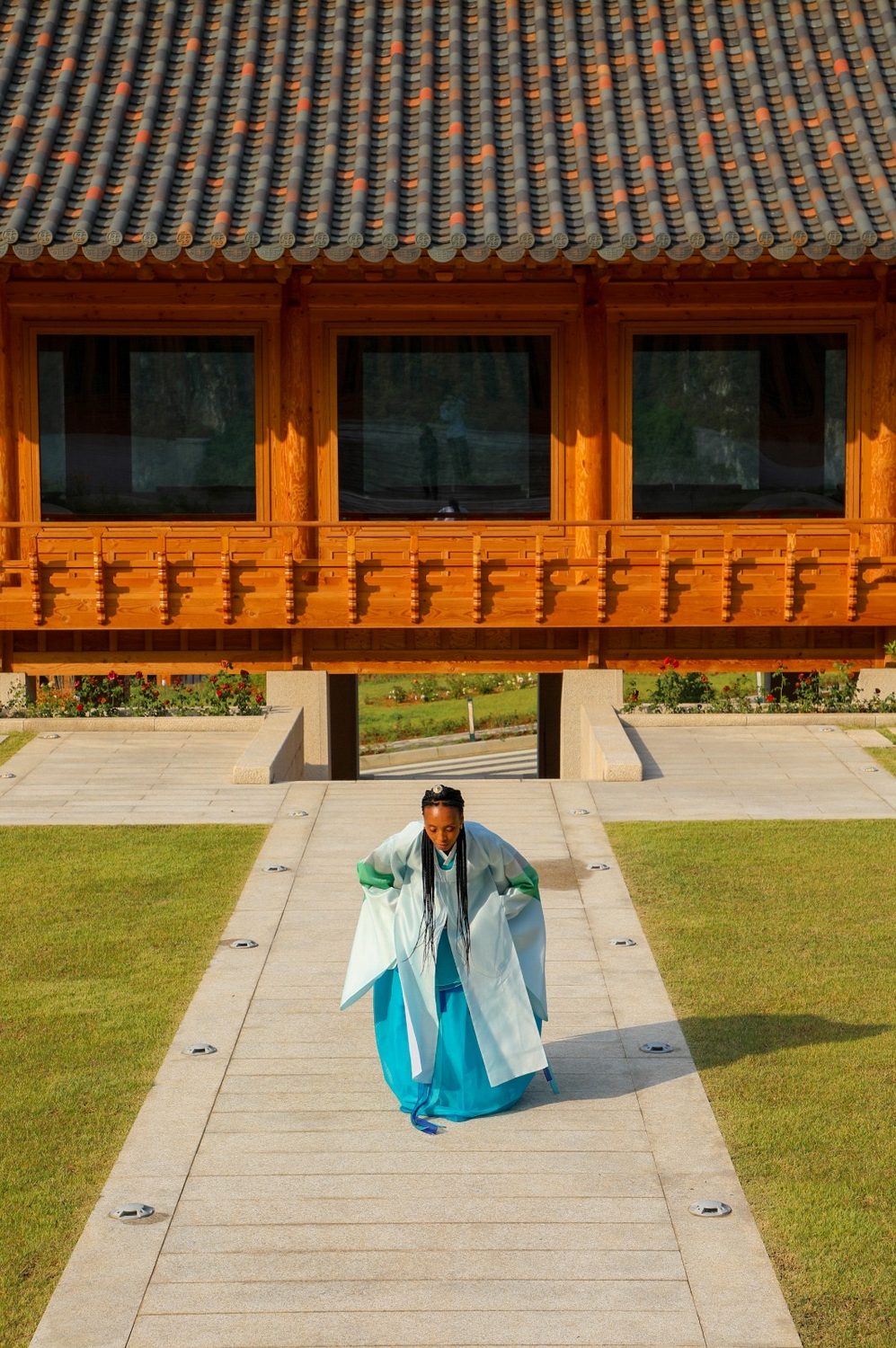
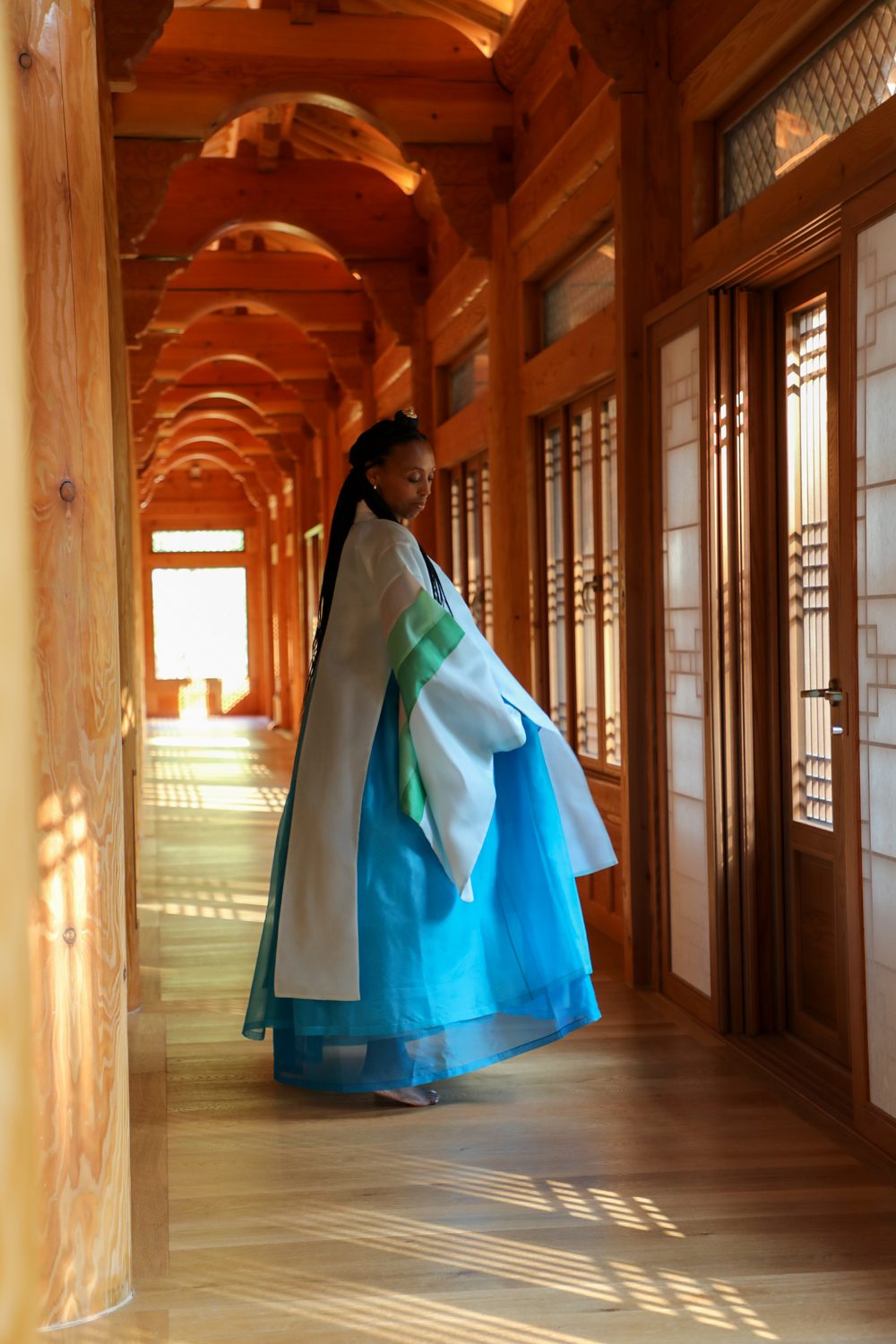
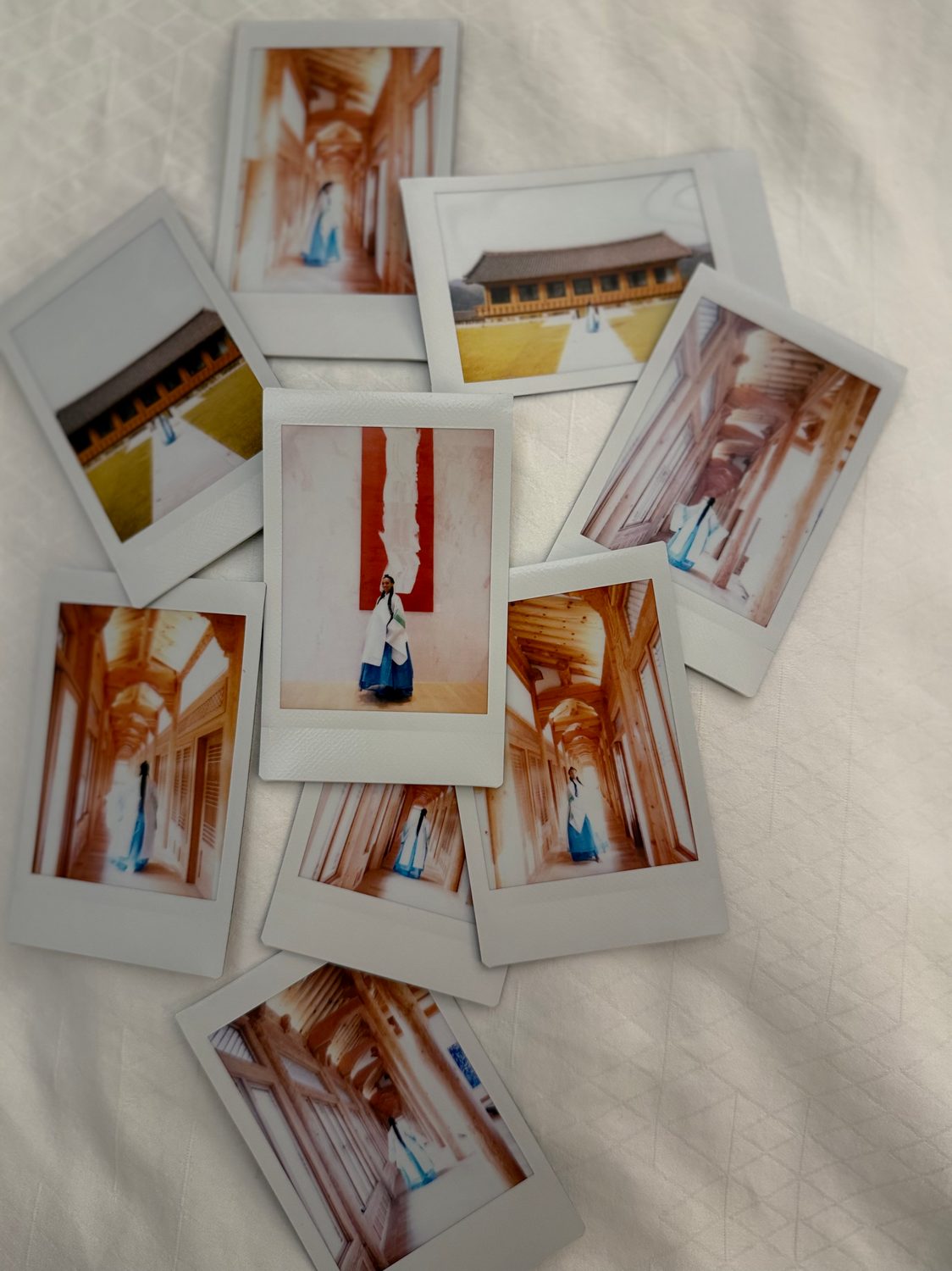
On one of the days they dressed me. A hanbok is not a costume you put on so much as a posture you adopt; the weight of it changes how you stand, how you turn, how slowly you cross a room. I bowed in the courtyard because it seemed the only correct thing to do. The estate had been quietly rearranging my behaviour all week. Here it did so with cloth.
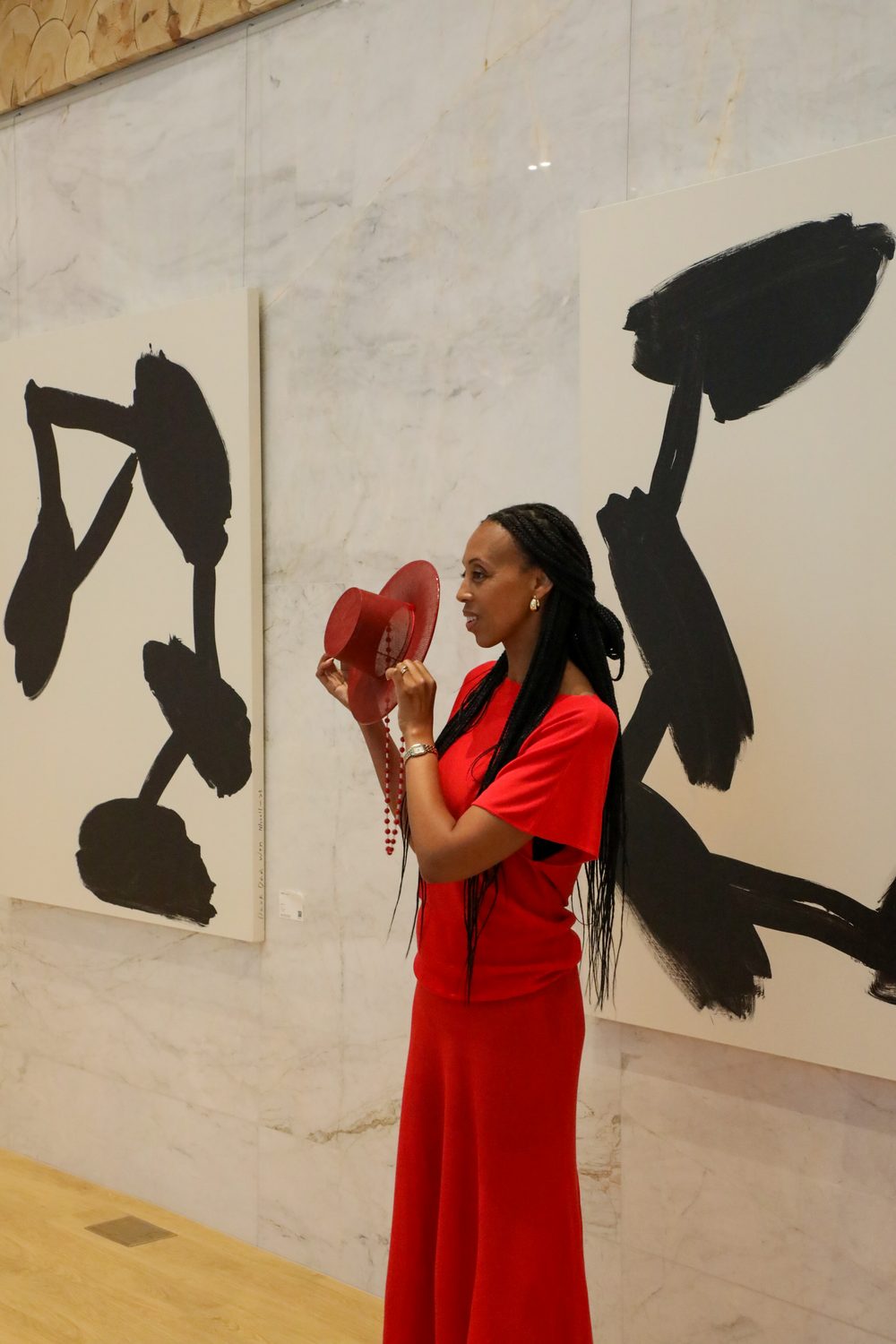
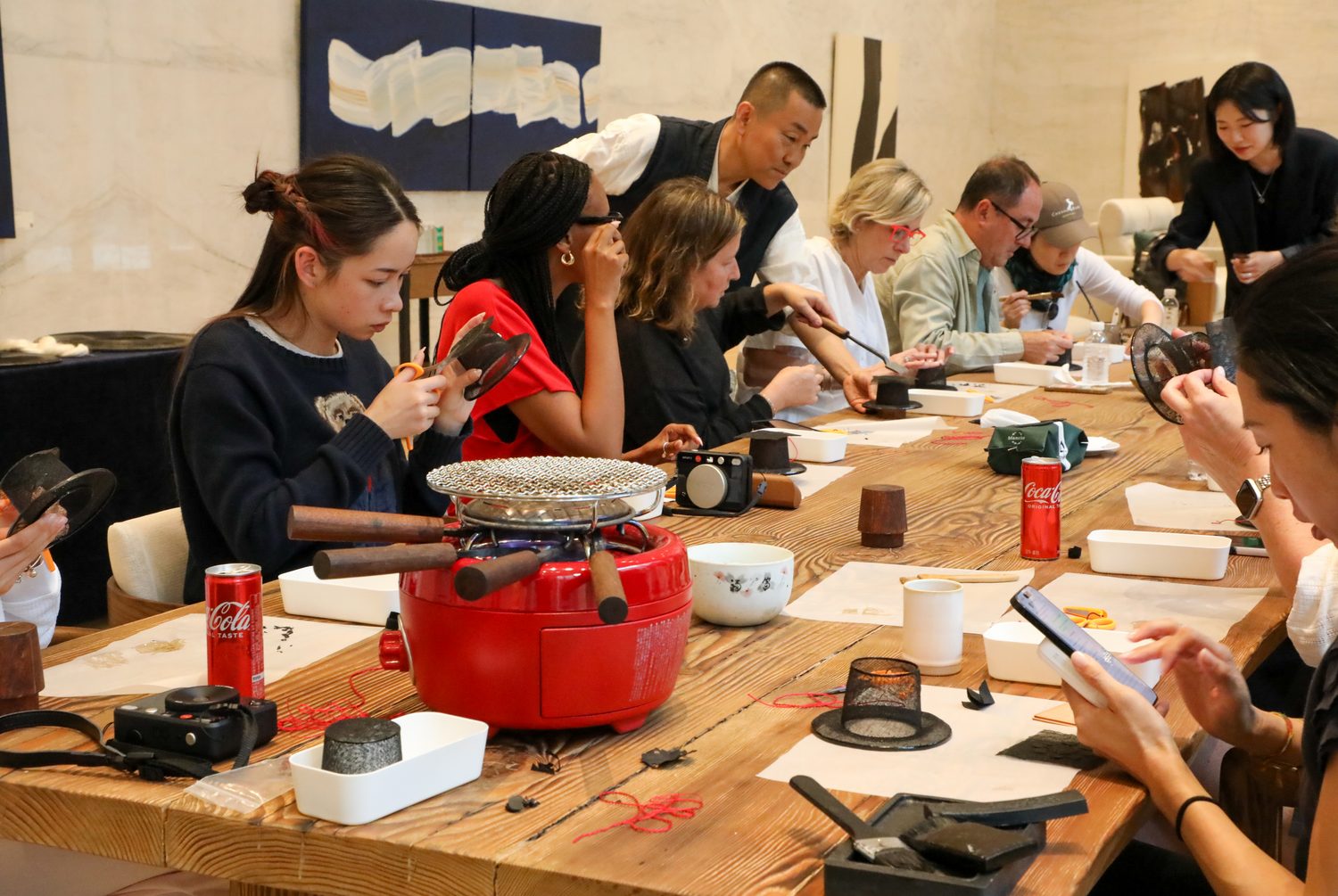
Later, at a long table, a gat master set us to work. The gat, the brimmed hat of horsehair and fine bamboo, so sheer it is almost mesh, is one of those crafts that looks simple until your own hands are on it. Ours were clumsy. His were not. He moved down the table correcting grips, saying little, and the room fell into the particular quiet of people concentrating. It is a useful thing, now and then, to be shown how long it takes to be good at one small thing.
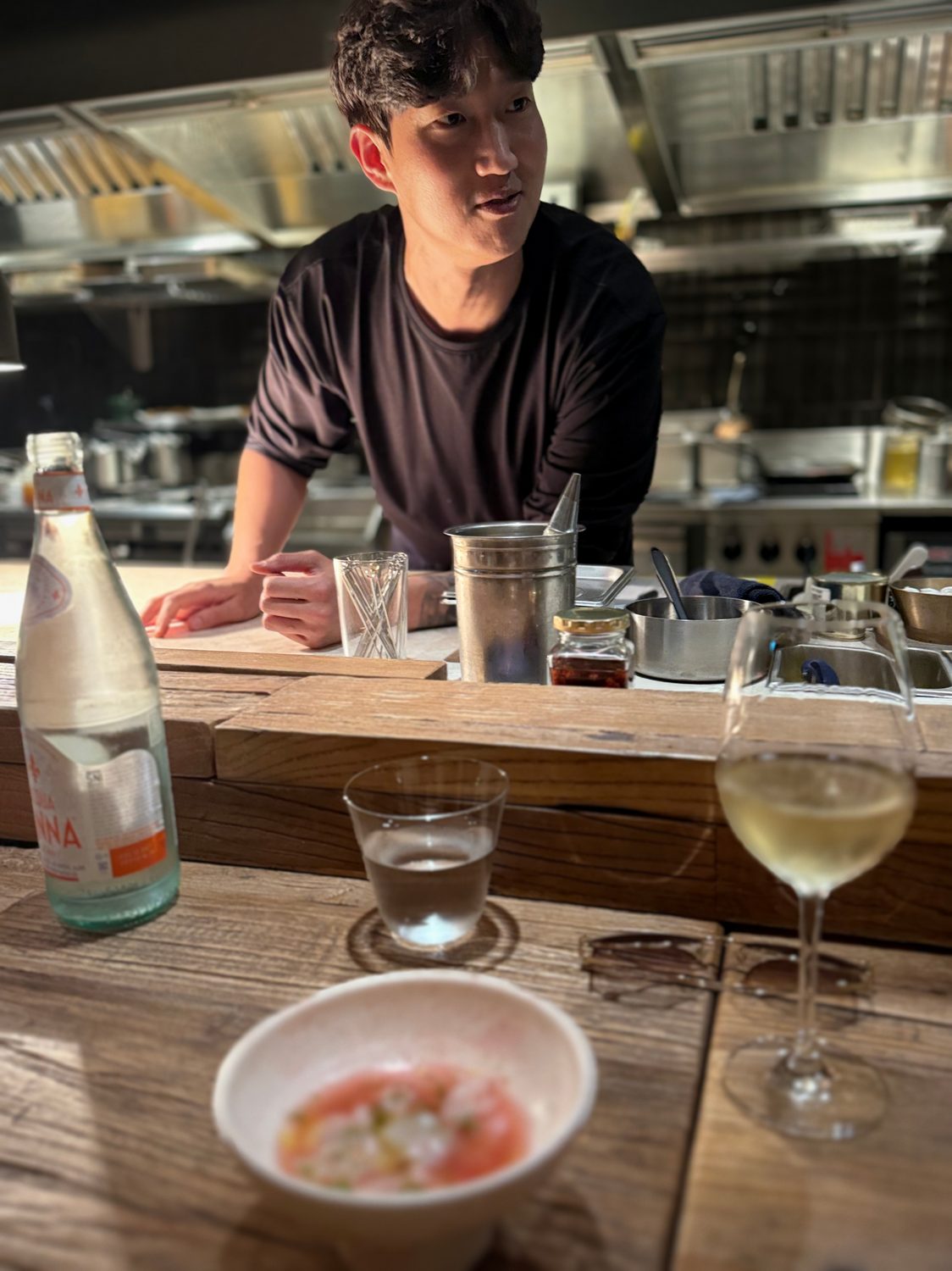
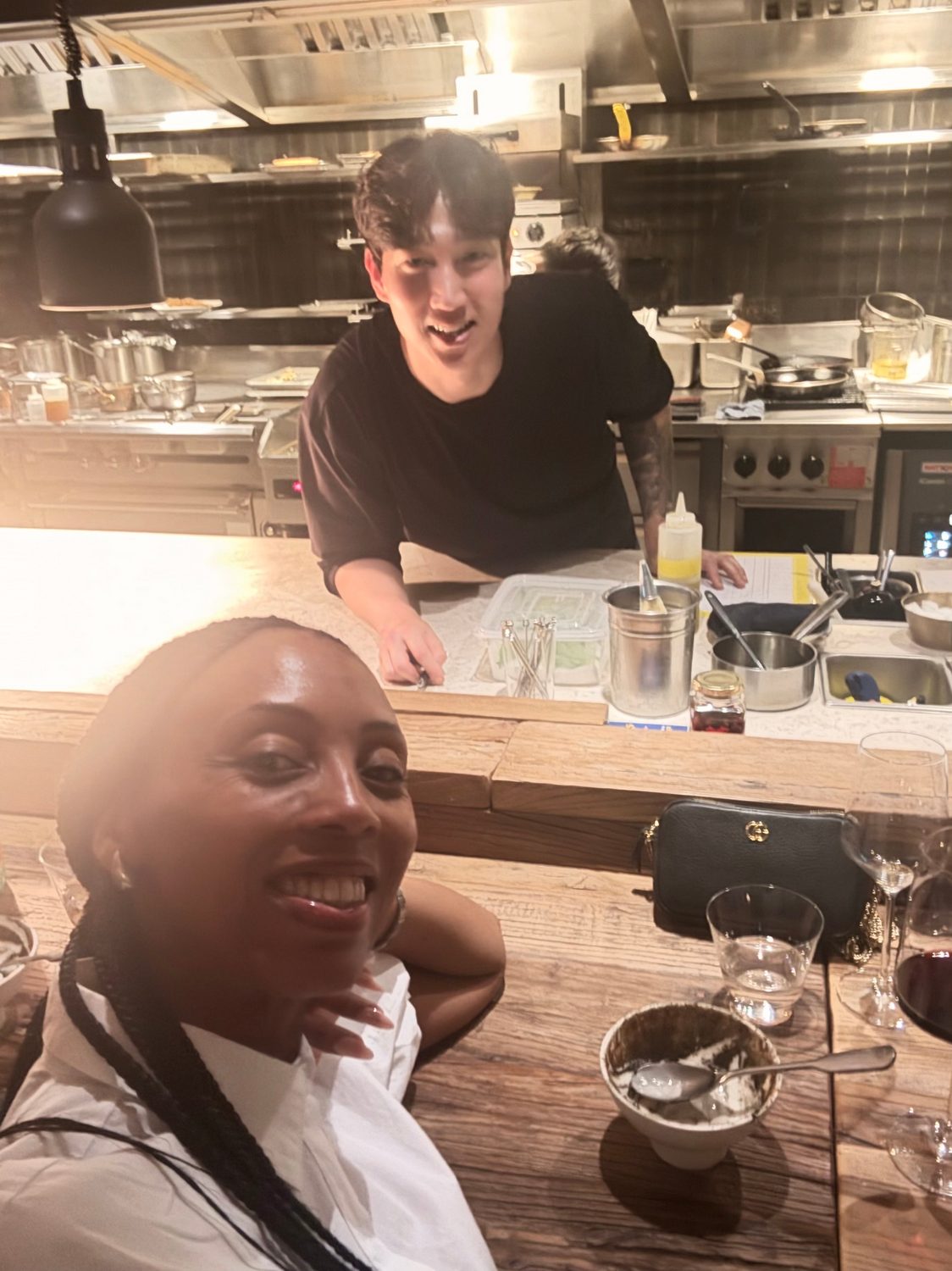
At ONYVA the kitchen is open and the guests sit around it, wrapped close to where the cooking happens. Chef Jin-Yong Park plated each course himself, directly in front of us, and explained it as he went. There was no performance in it. No flourish for the room. He spoke the way someone does when they are thinking aloud about their own work.
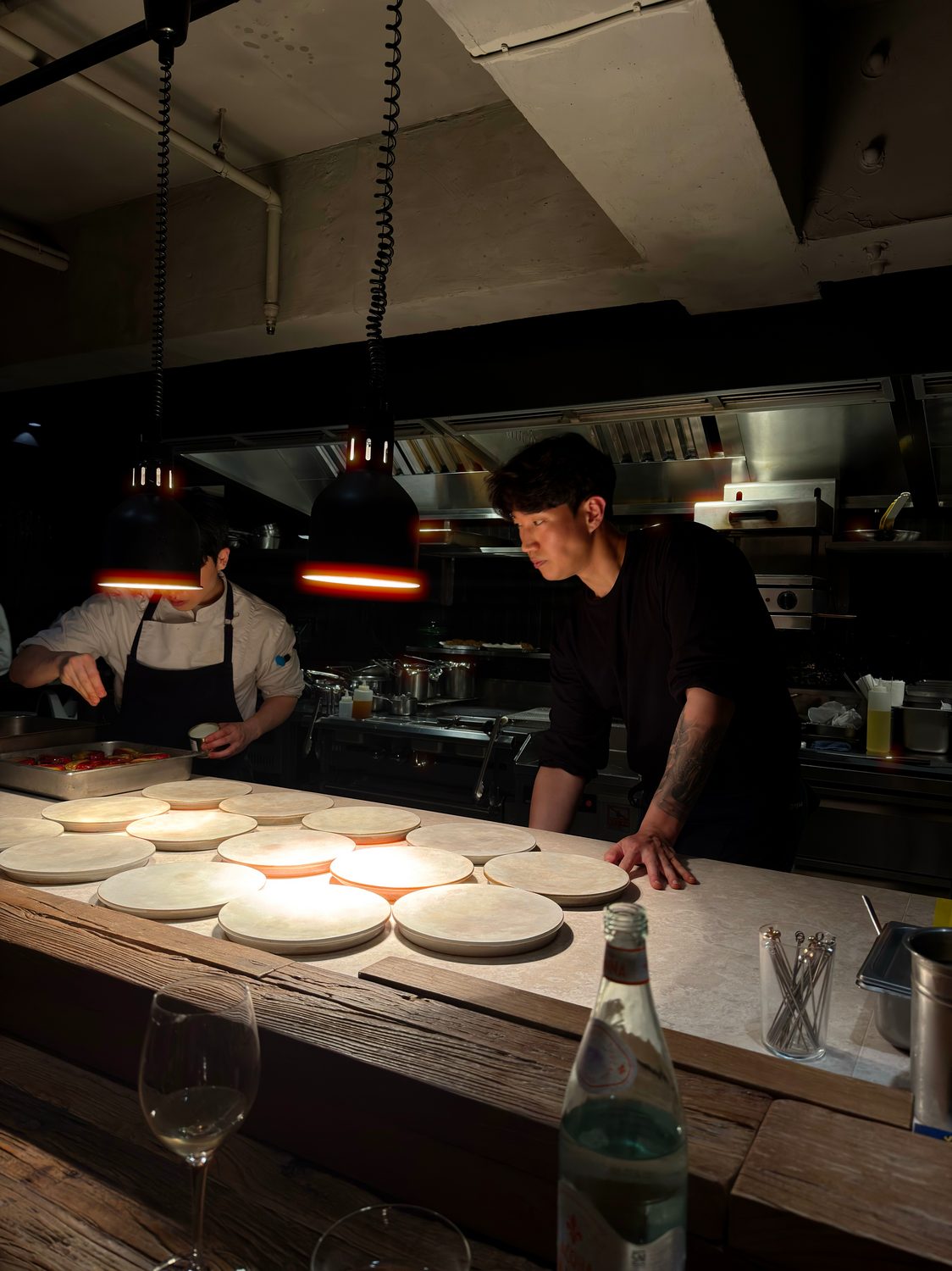
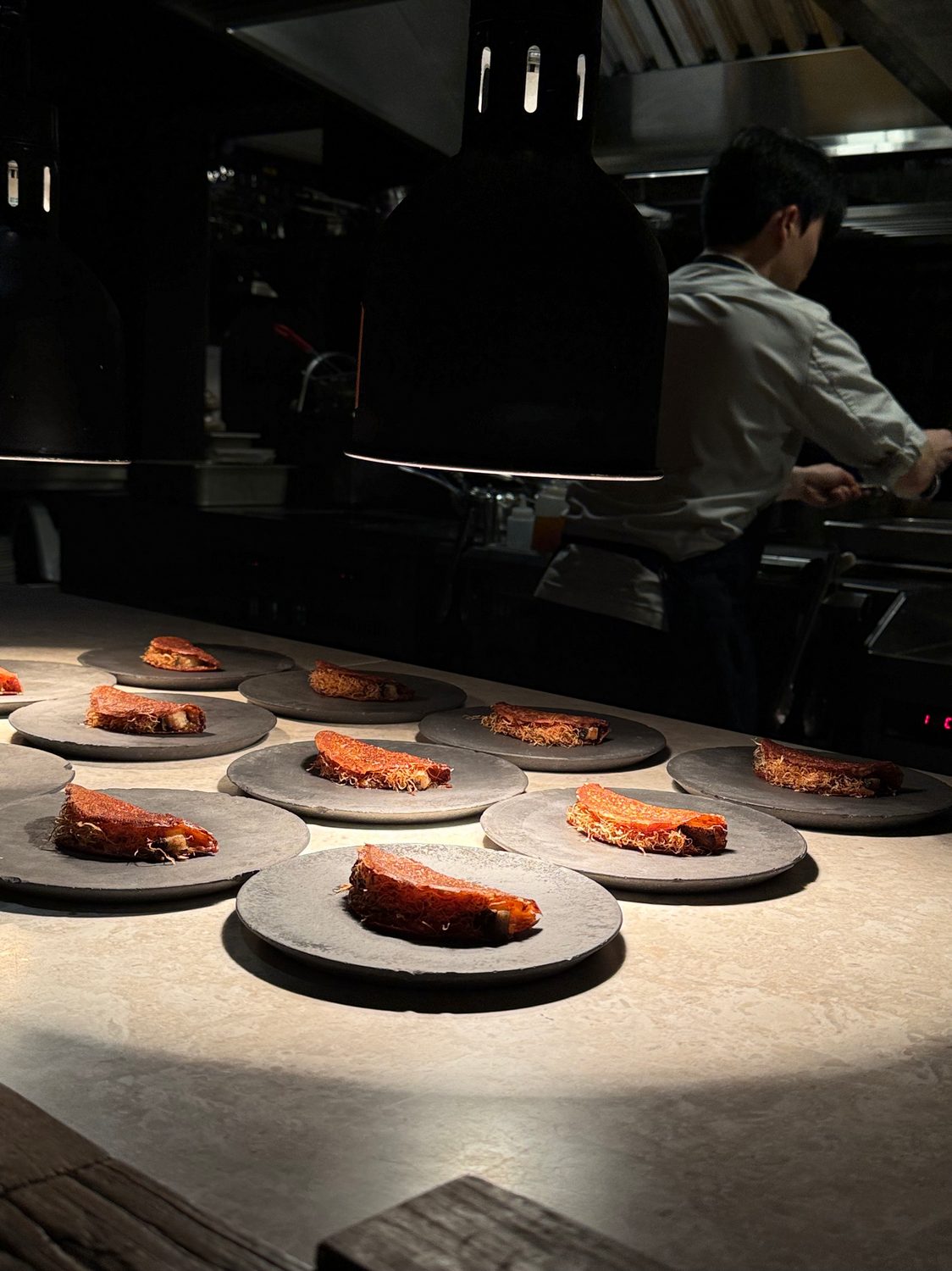
It changed the register of the evening. We were not being served so much as let in. Dinner became a conversation about decisions, why this temperature, why this order, why restraint here and generosity there. I have eaten more elaborate meals. I am not sure I have understood many of them as well.
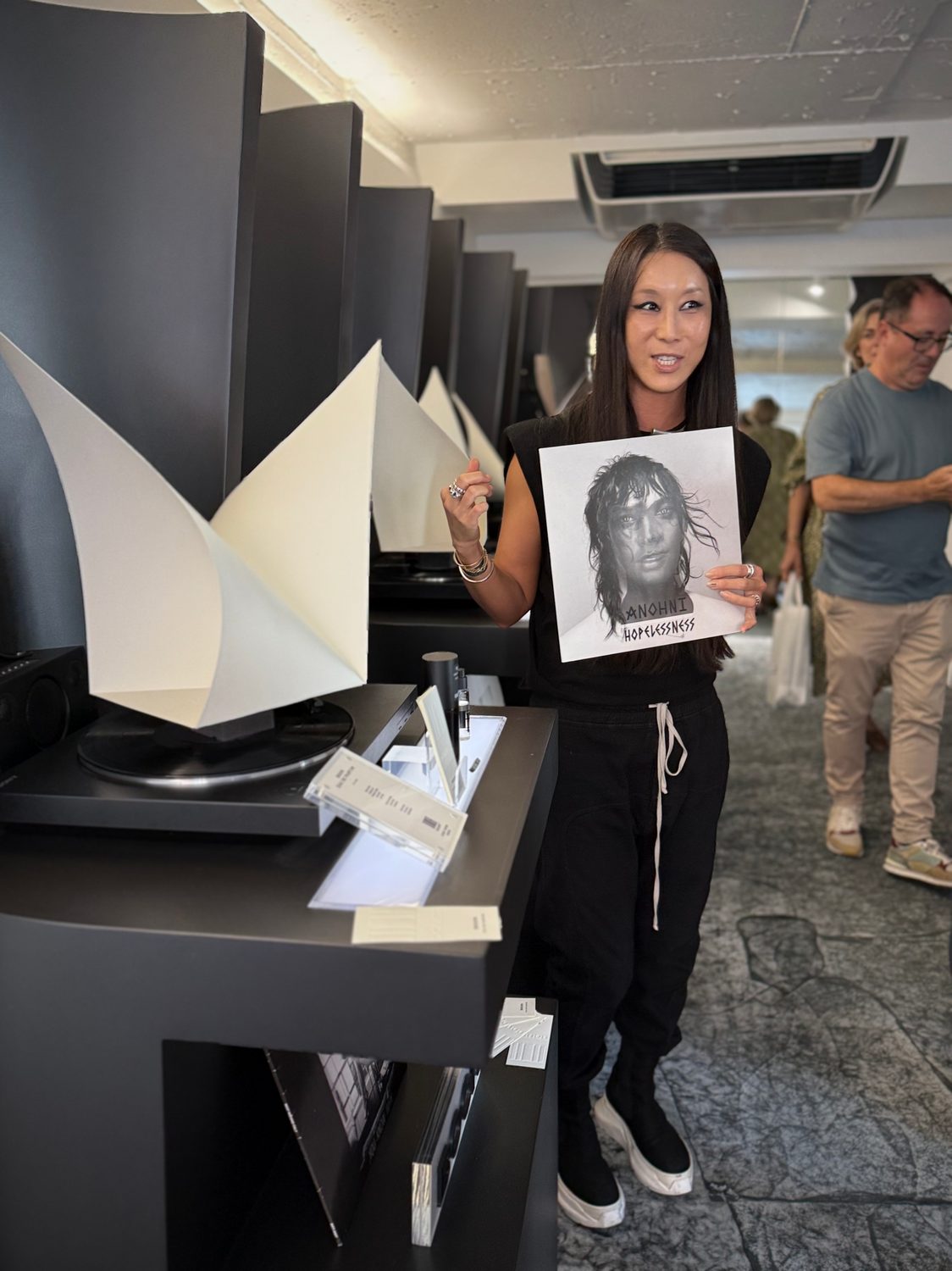
I will not describe the perfumes. I am not sure I could, and the founders would probably prefer I didn't. What I remember is the atmosphere. The people behind Doubt are young and genuinely cool in the way that cannot be manufactured, and they understand that scent does not arrive alone.
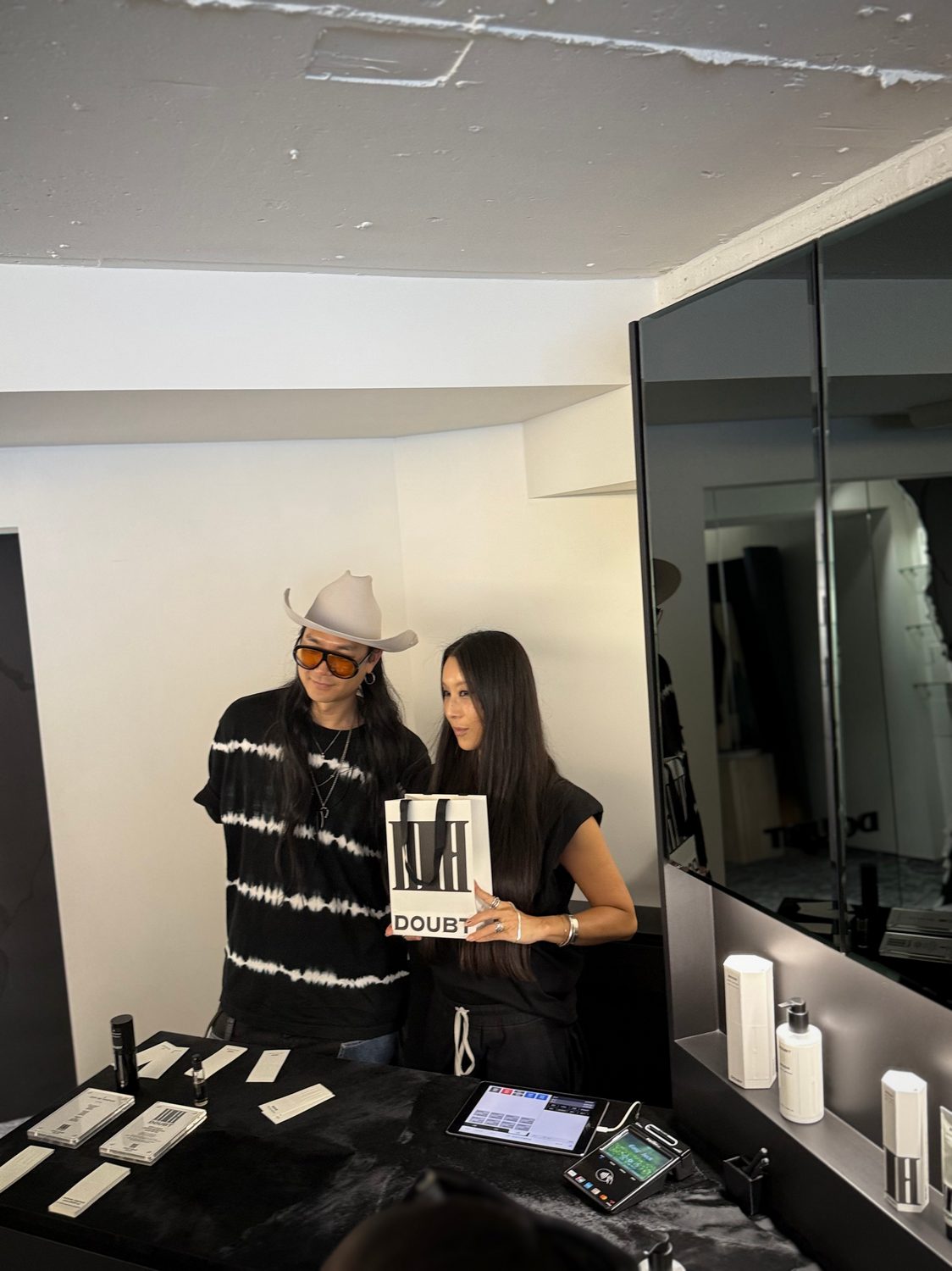
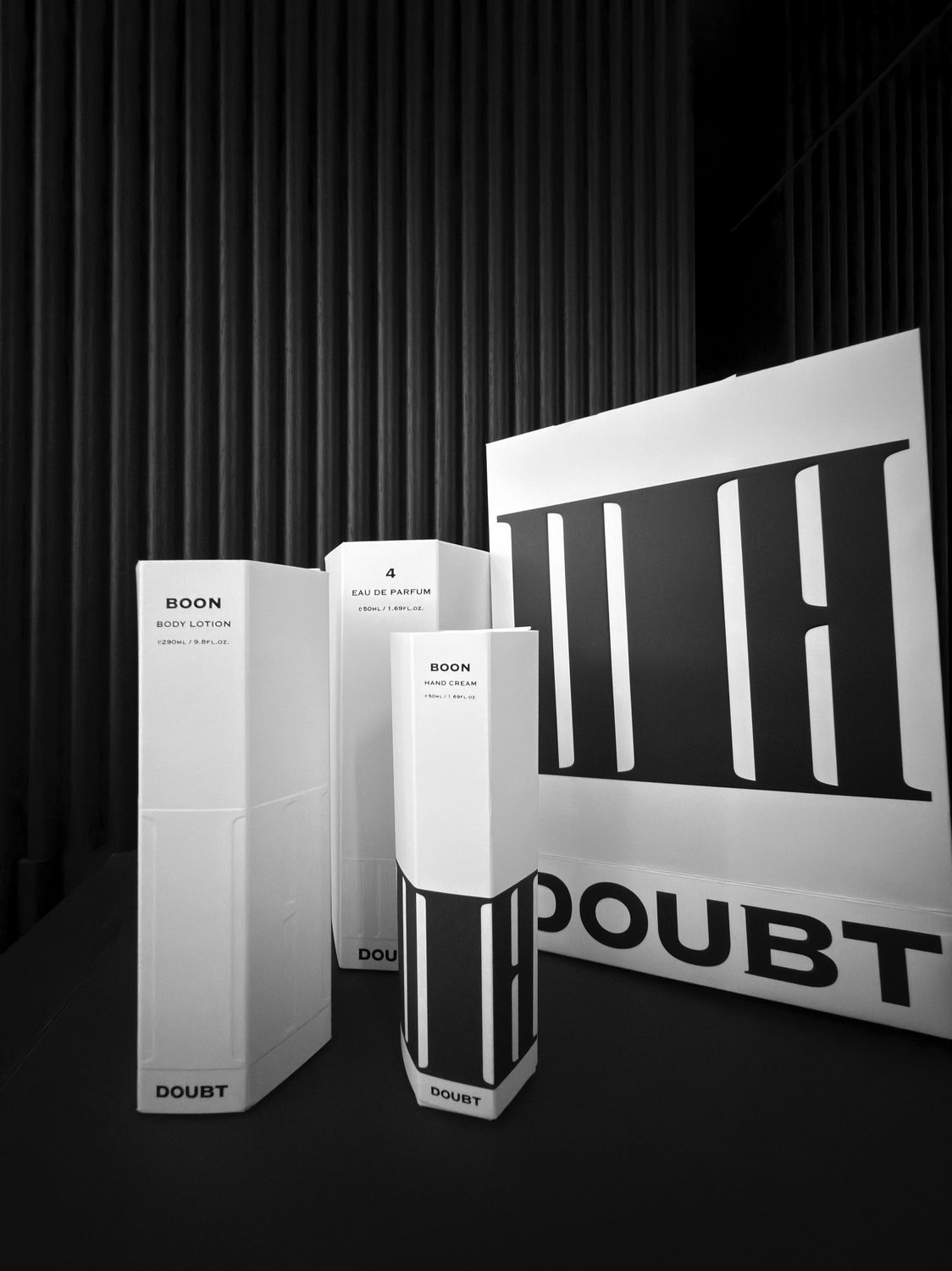
Music was part of it. The soundtrack shifted with each fragrance, and the shift was not decoration. It was instruction. Memory, emotion, sound, place: assembled into something you were meant to feel before you were meant to name. It was not retail. It was storytelling that happened to end in a bottle.
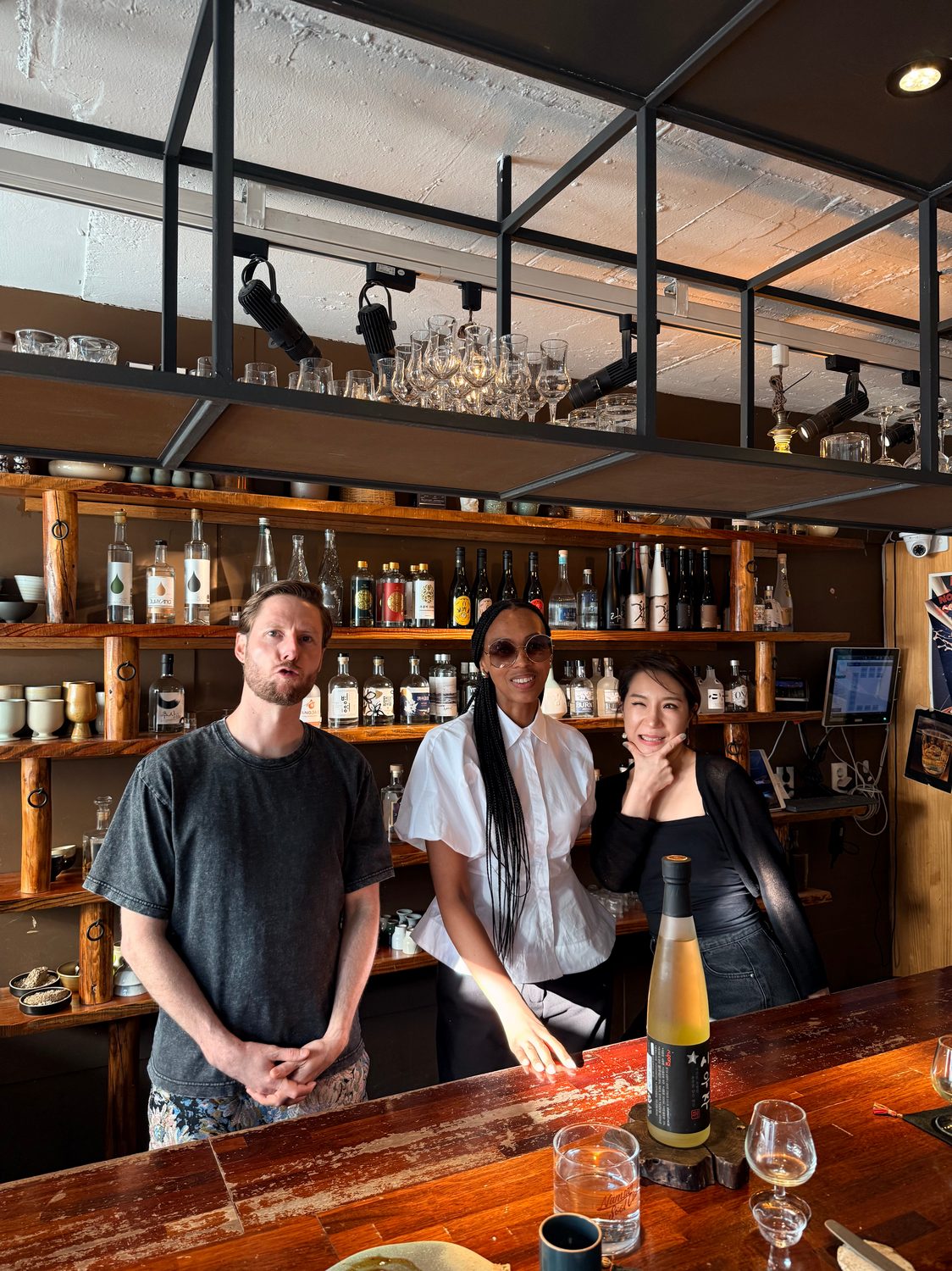
Dustin Wessa could have made Korean drinking culture sound like a syllabus. He did the opposite. He was warm, funny, relaxed, the kind of host who makes you forget you are being taught. The history was there, and the craft, and the seriousness underneath. But it arrived through generosity rather than authority.
I have noticed this more than once now. The people who know the most are often the least intent on showing it. Wessa made sool feel like an invitation rather than an examination, and the subject opened because he did.
So I return to where I started, and to the small correction the week made. I learnt very little from places. I learnt almost everything from people.
The founder who refused the easy version of tradition. The daughter who explained him. The guide who moved my attention a few degrees and changed the room. The chef who thought out loud. The young perfumers and their soundtrack. The teacher who taught by pouring.
We talk, in this industry, about finding authentic experiences, as though authenticity were a place you could be driven to. After Seoul I am less sure. Perhaps it was never a place at all. Perhaps it is the privilege of being shown a destination through the eyes of the people who have given their lives to it, and the judgement, quietly exercised, of someone deciding which eyes, and in what order.
No algorithm can do that. People can.
New Field Notes, sent only when there is something worth saying.
Field Note 001. Written from first-hand observation in Seoul and Wonju. With thanks to Blair Hong, the Seoul Metropolitan Government and Connections Luxury.
← Back to the Journal